
Integrated Biomechanical Framework for the Barbell Back Squat: A 26-Parameter Model for Technique Standardization and Injury Risk Reduction
Article type: Framework / Position Paper (hypothesis-generating). This article proposes a model to be tested. It does not report new experimental data and does not establish clinical effectiveness. About article types
Licence
This article is distributed under the terms of the Creative Commons Attribution 4.0 International License (CC BY 4.0).
Conflict of Interest
The author(s) declare no competing interests.
Funding
No external funding was received.
Abstract
Background: The back squat is one of the most widely prescribed resistance exercises in athletic performance, rehabilitation, and strength training programs. Despite its extensive use, considerable variability exists in coaching practices and execution strategies due to differences in anthropometry, mobility, and training objectives. The absence of a unified biomechanical framework has contributed to inconsistent technique instruction and increased risk of mechanical overload and injury. This study presents a conceptual biomechanical framework derived from existing literature and biomechanical modeling to standardize squat technique evaluation. Objective: The purpose of this position paper is to propose a comprehensive biomechanical framework for the back squat that integrates anthropometric considerations, joint mechanics, neuromuscular control, and real-time biomechanical feedback to guide technique standardization and injury-risk reduction. Methods: The framework synthesizes evidence from biomechanical literature and integrates quantitative parameters derived from three-dimensional motion capture, force-plate kinetics, surface electromyography (EMG), and inertial measurement unit (IMU) data. Twenty-six biomechanical parameters (A–Z) were organized to describe key aspects of squat execution, including base of support, bar path mechanics, joint kinematics, torque distribution, neuromuscular control, and movement consistency under load. Framework and Key Parameters: The proposed model establishes recommended ranges for joint angles, intra-abdominal pressure, ground reaction forces, and bar-path deviation during the back squat. The framework also identifies critical fault thresholds (e.g., lumbar flexion >10°, knee valgus >5°, bar path deviation >3 cm) and integrates sensor-based monitoring approaches to facilitate real-time feedback during training and rehabilitation contexts. Practical Implications: By combining anthropometric individualization with objective biomechanical measurement, this framework provides a structured reference for coaches, clinicians, and researchers seeking to optimize squat mechanics, enhance performance outcomes, and reduce injury risk. Adoption of standardized biomechanical parameters may improve consistency in instruction, support movement screening protocols, and advance evidence-based practice in strength and conditioning.
Graphical Abstract
Graphical Abstract
A conceptual overview of the proposed biomechanical framework for the back squat integrating anthropometric variation, joint kinematics, neuromuscular activation, and sensor-derived biomechanical measurements to improve technique standardization, performance outcomes, and injury risk management.
Graphical Abstract. Conceptual flow of the integrated biomechanical framework illustrating how anthropometric characteristics and biomechanical measurements inform a 26-parameter analytical model to optimize squat mechanics, enhance performance, and reduce injury risk.
Framework Summary Table
The table below provides a compact overview of selected framework variables and recommended reference ranges. Full operational definitions and context-dependent interpretation are provided in the complete article PDF.
| Parameter | Variable | Recommended Range | Measurement |
|---|---|---|---|
| Anthropometry | Femur–torso ratio | Individualized | Motion capture |
| Joint Angles | Knee flexion | 125–135° | IMU |
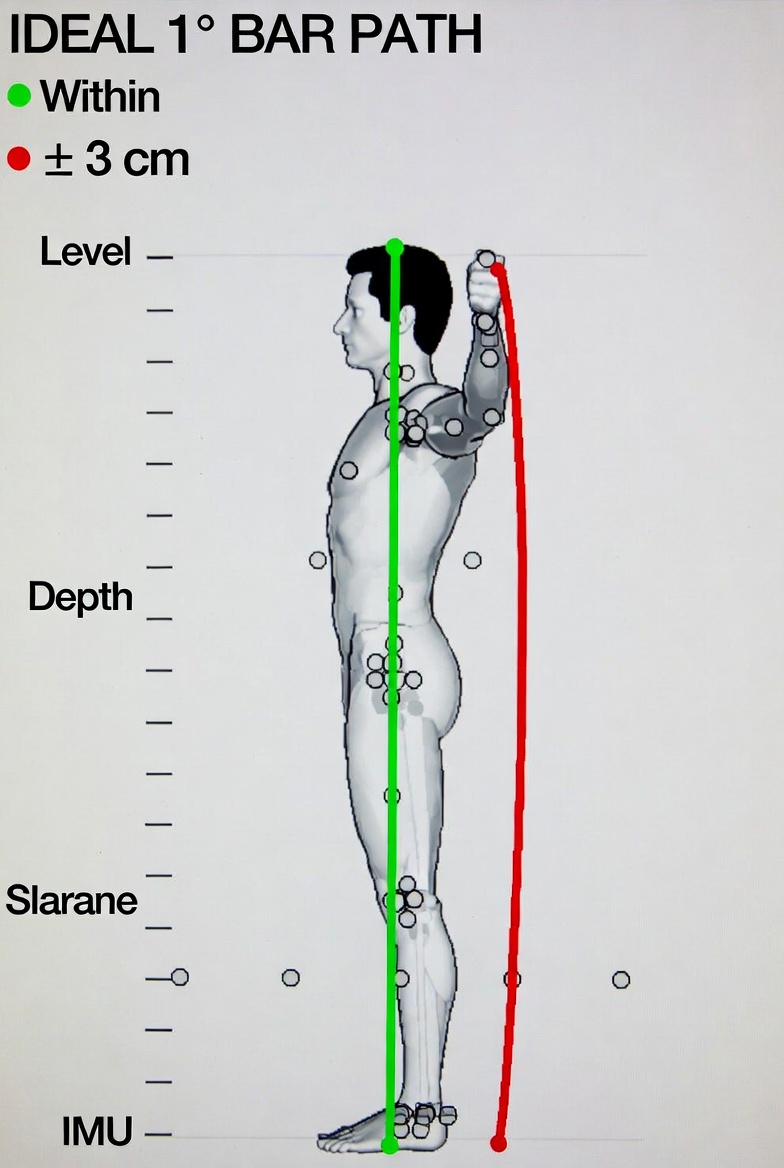
| Bar Path | Horizontal deviation | ≤ 3 cm | Video tracking |
| Lumbar alignment | Lordosis | 0–5° | Motion capture |
Methods (Measurement Overview)
This paper presents a structured biomechanical framework for the barbell back squat derived from established evidence across anthropometry, joint mechanics, neuromuscular coordination, and objective movement measurement. The framework is operationalized through measurable parameters that can be captured using laboratory-grade systems (3D motion capture, force plates, EMG) and/or field-appropriate tools (IMU-based tracking, high-frame-rate video analysis), depending on setting.
- Kinematics: joint angles (hip/knee/ankle), bar path deviation, segment alignment.
- Kinetics: force-plate–derived loading and joint torque profiles (hip and knee demand distribution).
- Neuromuscular indicators: surface EMG activation ranges across prime movers and stabilizers.
- Consistency metrics: repetition-to-repetition variance under load and fatigue (e.g., knee tracking variance).
Selected Framework Parameters (Excerpt)
The following excerpts illustrate how the framework translates squat mechanics into measurable, coach- and laboratory-readable variables. Full parameter definitions and ranges are provided in the complete manuscript.
D: Depth & Dorsiflexion
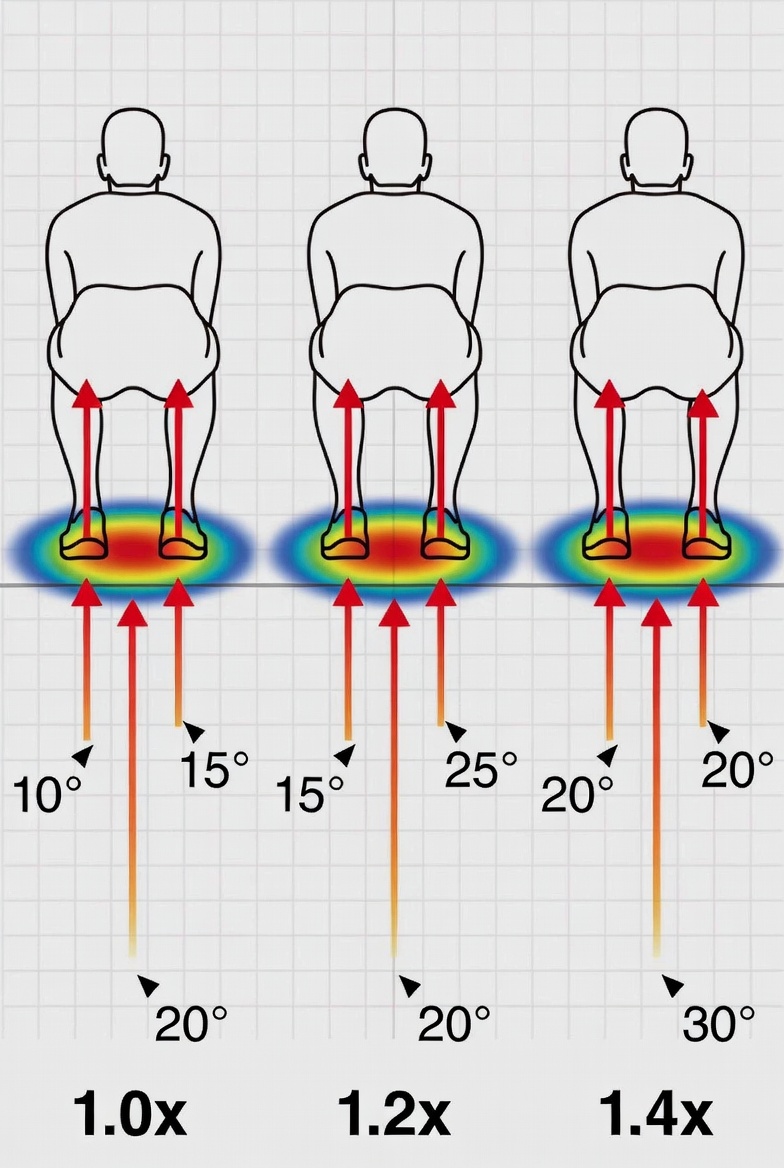
Recommended depth is the hip crease at or below the patella while maintaining a neutral lumbar spine. Typical kinematic ranges include: hip flexion 110–120°, knee flexion 125–135°, and ankle dorsiflexion 15–25°.
E: Eccentric & Concentric Phases (Tempo)
A controlled eccentric phase (2–4 s) followed by an explosive concentric phase is used to optimize strength and power expression. A standard reference tempo is 3 s descent and 1 s ascent, adjusted according to load, athlete profile, and training goal.
M: Muscular Contribution
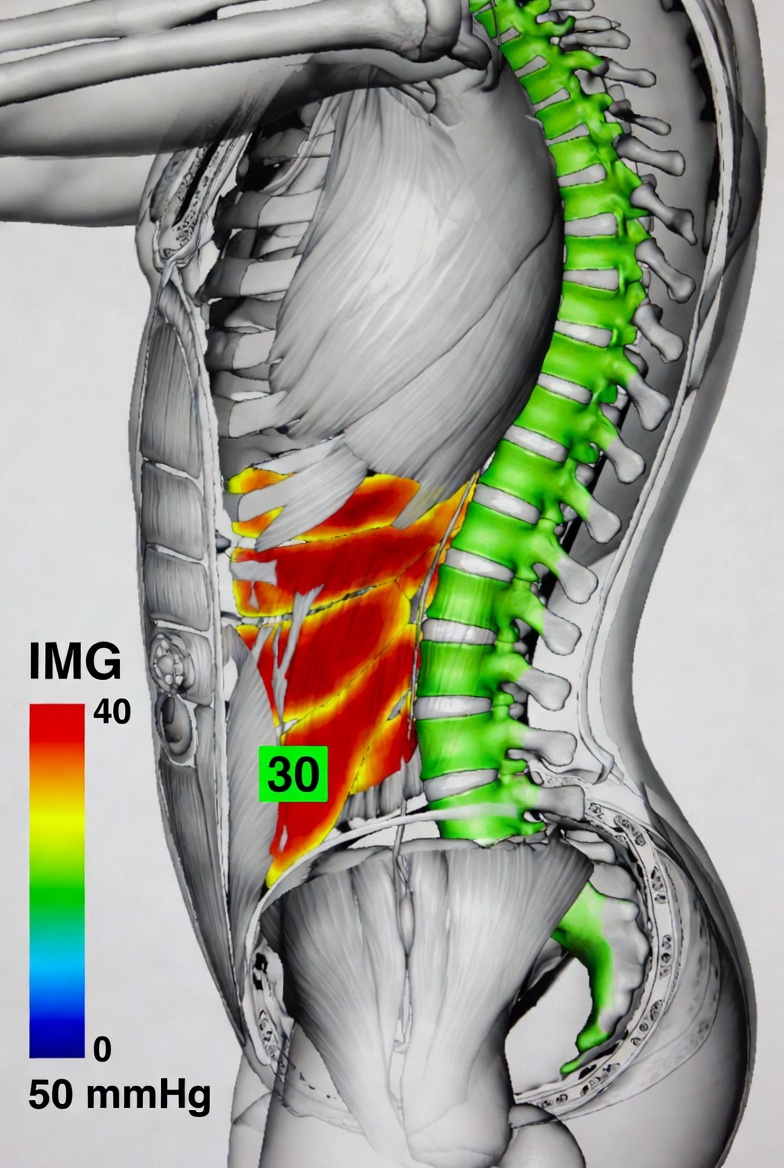
The back squat requires integrated activation of hip and knee extensors with simultaneous trunk stabilization. The gluteus maximus and quadriceps femoris act as primary force generators, while the hamstrings and spinal stabilizers contribute to joint stabilization and force transmission through the posterior kinetic chain. Electromyographic studies commonly report activation levels approximating glutes (~45% MVC), quadriceps (~40% MVC), hamstrings (~35% MVC), and trunk stabilizers (~30% MVC) during controlled squatting tasks.
N: Neuromuscular Control
Neuromuscular control reflects the capacity to maintain coordinated movement patterns despite fatigue or load escalation. Stable joint trajectories and consistent limb alignment indicate effective motor control and sensorimotor integration, whereas excessive variability may reflect fatigue-related coordination loss or compensatory strategies.
O: Objective Measurement
Biomechanical assessment can be enhanced using motion capture systems, force platforms, and electromyography, providing quantitative information on joint kinematics, ground-reaction forces, bar path, and muscle activation patterns. Common toolchains include 3D motion capture (e.g., Vicon), force plates (e.g., Kistler), and surface EMG, enabling comprehensive biomechanical profiling.
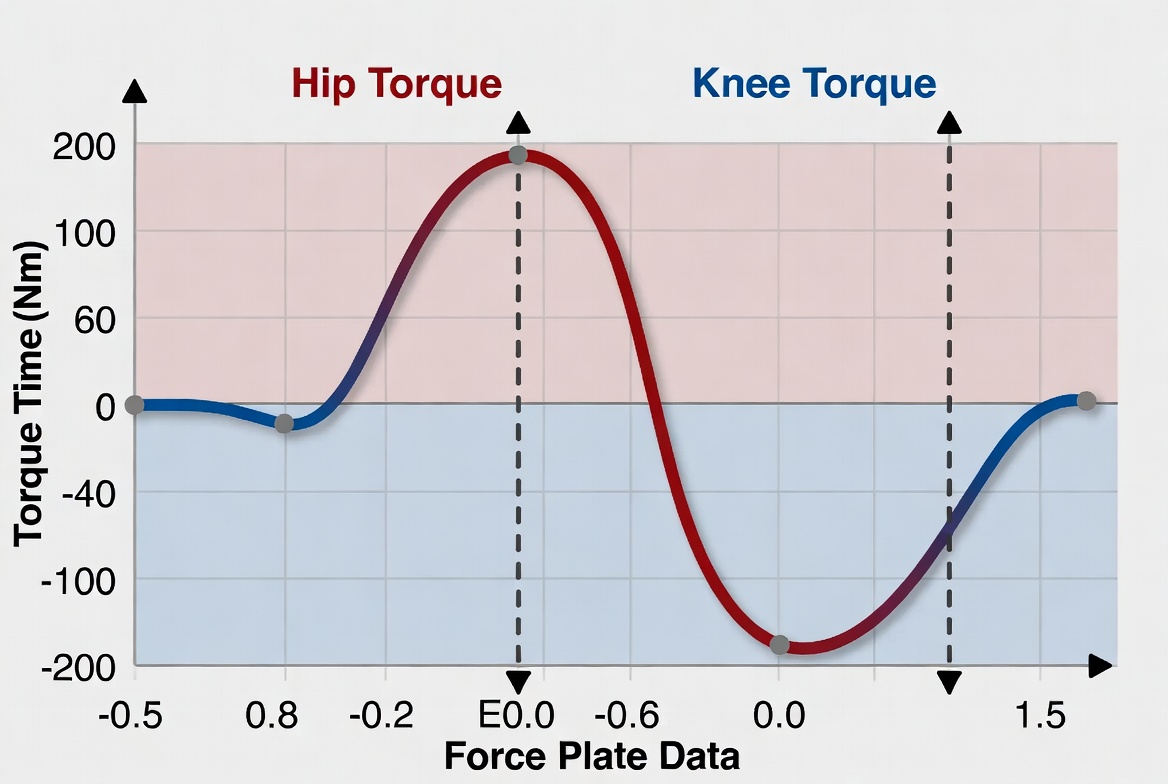
Figure 4
Figure 4. Hip and knee torque patterns during eccentric and concentric squat phases. Force-plate–derived torque curves illustrating the distribution of mechanical demand across the hip and knee joints throughout the squat movement. The eccentric phase demonstrates controlled loading as torque increases prior to the transition point, while the concentric phase reflects rapid force production to overcome gravitational load. These torque–time characteristics are essential for interpreting joint loading strategies during resistance training.
How to Cite
Mehta, N. (2026). Integrated Biomechanical Framework for the Barbell Back Squat: A 26-Parameter Model for Technique Standardization and Injury Risk Reduction. Journal of Movement Mechanics & Biomechanics Science, 2(3). https://doi.org/10.66078/jmmbs.v3i1.007
Download & Full Text
Article History
- Received: 2026-01-02
- Accepted: 2026-09-02
- Published: 2026-03-04
Article Information & Citation
Open AccessTitle
Integrated Biomechanical Framework for the Barbell Back Squat: A 26-Parameter Model for Technique Standardization and Injury Risk Reduction
Authors & Affiliations
- Neeraj Mehta iD0000-0001-6200-8495MMSx Authority Institute for Movement Mechanics & Biomechanics Research
- Steve Henderson iD0009-0005-7485-1427MMSx Authority Institute for Movement Mechanics & Biomechanics Research
- Hatem Spetan iD0009-0009-2138-7498University of Jordan
How to Cite (APA 7)
Article Record
- Journal
- Journal of Movement Mechanics & Biomechanics Science (JMMBS) · ISSN 3070-3662 (Online)
- Volume / Issue
- Vol. 3, Issue 1 · 2026
- Article type
- Framework (hypothesis-generating)
- DOI
- https://doi.org/10.66078/jmmbs.v3i1.007
- Received
- 2 January 2026
- Published
- 4 March 2026
- Publisher
- MMSx Authority Institute for Movement Mechanics & Biomechanics Research
- Updates
- Check for updates — corrections and retractions are listed on the journal’s Corrections page.
- Peer review
- Journal policy: double-blind peer review — see Peer Review Process.
- Translations
- हिन्दी — पूर्ण-पाठ अनुवाद