JMMBS
Journal of Movement Mechanics & Biomechanics Science
Vol. 3 · Issue 1 · April 2026
ISSN: 3070-3662 (Online) · DOI Prefix: 10.66078/jmmbs
Original Research — Single-Subject ABAC Withdrawal Design
Short-Term Effects of Mobilization With Movement, With or Without Exercise, on Pain and Shoulder Range of Motion in Recreational Athletes With Subacromial Impingement Syndrome: A Single-Subject ABAC Withdrawal Study
Investigación Original — Diseño de Retirada ABAC de Sujeto Único
Efectos a Corto Plazo de la Movilización con Movimiento, Con o Sin Ejercicio, sobre el Dolor y el Rango de Movimiento del Hombro en Atletas Recreativos con Síndrome de Impingement Subacromial: Un Estudio de Retirada ABAC de Sujeto Único
بحث أصيل — تصميم سحب ABAC أحادي المشارك
التأثيرات قصيرة المدى للتعبئة مع الحركة، مع أو بدون تمرين، على الألم ومدى حركة الكتف في الرياضيين الترفيهيين المصابين بمتلازمة التضيّق تحت الأخرومي: دراسة سحب ABAC أحادية المشارك
Abstract
English
Background
Mobilization with movement (MWM) and neuromuscular reeducation training are widely utilised interventions to improve range of motion and reduce pain in individuals with subacromial impingement syndrome (SIS). Limited evidence exists describing how these strategies interact and complement each other within and between treatment sessions.
Objective
To evaluate the effectiveness of a single session of MWM alone compared with MWM combined with rotator cuff neuromuscular reeducation exercise on pain and active shoulder flexion AROM in recreational athletes with SIS.
Methods
Quasi-experimental ABAC single-subject withdrawal design across four recreational athletes (2M, 2F; ages 19–21) with SIS. Phase B: MWM alone. Phase C: MWM + neuromuscular reeducation. Outcomes: pain-free AROM (Acumar digital inclinometer; ICC 0.90–0.98) and GROC scale (MCID ≥5 points). Two-band SD statistical analysis.
Results
Statistically significant AROM improvements in 3/4 participants following both interventions. MWM + exercise: mean AROM gain 23.2° vs. 8.4° (MWM alone); mean effect duration 25.5 min vs. 15 min. MCID achieved in two participants per condition. Sustained 24-hour improvements in combined condition only.
Conclusions
Both interventions improve pain and AROM in recreational athletes with SIS. Neuromuscular reeducation enhances magnitude and duration of effects. Inter-individual variability underscores the importance of individualised clinical decision-making.
Keywords: mobilization with movement (MWM); neuromuscular reeducation; subacromial impingement syndrome (SIS); active shoulder flexion; pain reduction (MCID); single-subject ABAC withdrawal design; GROC scale; recreational athletes
Resumen
Español
Antecedentes
La movilización con movimiento (MWM) y la reeducación neuromuscular son intervenciones ampliamente utilizadas para mejorar el rango de movimiento y reducir el dolor en el síndrome de impingement subacromial (SIS). La evidencia sobre cómo estas estrategias interactúan es limitada.
Objetivo
Evaluar la efectividad de una sesión de MWM sola frente a MWM combinada con reeducación neuromuscular del manguito rotador sobre el dolor y el RDAM activo de flexión del hombro en atletas recreativos con SIS.
Métodos
Diseño de retirada ABAC de sujeto único cuasiexperimental en cuatro atletas (2H, 2M; edades 19–21) con SIS. Fase B: MWM sola. Fase C: MWM + reeducación neuromuscular. Resultados: RDAM sin dolor (inclinómetro digital) y escala GROC (MCID ≥5 pts). Análisis estadístico de dos bandas DE.
Resultados
Mejoras significativas de RDAM en 3/4 participantes. MWM + ejercicio: ganancia media 23,2° vs. 8,4° (MWM sola); duración media del efecto 25,5 min vs. 15 min. MCID alcanzado en dos participantes por condición. Mejoras sostenidas a 24h solo en condición combinada.
Conclusiones
Ambas intervenciones mejoran el dolor y el RDAM en atletas recreativos con SIS. La reeducación neuromuscular mejora la magnitud y duración de los efectos. La variabilidad interindividual subraya la importancia de la toma de decisiones clínicas individualizada.
Palabras clave: movilización con movimiento (MWM); reeducación neuromuscular; síndrome de impingement subacromial (SIS); flexión activa del hombro; reducción del dolor (MCID); diseño de retirada ABAC; escala GROC; atletas recreativos
الملخص
العربية
الخلفية
تُعدّ التعبئة مع الحركة (MWM) وإعادة التأهيل العصبي العضلي من التدخلات المستخدمة على نطاق واسع لتحسين مدى الحركة وتخفيف الألم في متلازمة التضيّق تحت الأخرومي (SIS). الأدلة حول كيفية تفاعل هذه الاستراتيجيات محدودة.
الهدف
تقييم فاعلية جلسة MWM منفردة مقارنةً بـ MWM مقترنة بتمارين إعادة التأهيل العصبي العضلي للكفة المدوِّرة على الألم ومدى الحركة النشط لثني الكتف في رياضيين ترفيهيين مصابين بـ SIS.
المنهجية
تصميم سحب ABAC أحادي المشارك شبه تجريبي على أربعة رياضيين ترفيهيين (ذكران وأنثيان؛ أعمار 19–21) مشخّصين بـ SIS. المرحلة B: MWM منفردة. المرحلة C: MWM + إعادة التأهيل العصبي العضلي. مقاييس النتائج: مدى الحركة الخالي من الألم ومقياس GROC (MCID ≥5 نقاط).
النتائج
تحسينات معنوية في مدى الحركة لدى 3/4 مشاركين مع كلا الحالتين. MWM + تمرين: متوسط اكتساب 23.2° مقابل 8.4° (MWM منفردة)؛ متوسط مدة التأثير 25.5 دقيقة مقابل 15 دقيقة. الحد الأدنى للفرق السريري لدى مشاركَين في كل حالة. استمر التحسن 24 ساعة في الحالة المدمجة فقط.
الخلاصة
كلا التدخلين يُحسّنان الألم ومدى الحركة في الرياضيين الترفيهيين المصابين بـ SIS. تعزّز التمارين حجم التأثير ومدته. يؤكد التباين بين الأفراد أهمية اتخاذ القرار السريري الفردي.
الكلمات المفتاحية: التعبئة مع الحركة (MWM); إعادة التأهيل العصبي العضلي; متلازمة التضيّق تحت الأخرومي (SIS); ثني الكتف النشط; تخفيف الألم (MCID); تصميم السحب ABAC; مقياس GROC; الرياضيون الترفيهيون
23.2°
Mean AROM gain — MWM + Exercise
8.4°
Mean AROM gain — MWM Alone
25.5 min
Mean effect duration — combined
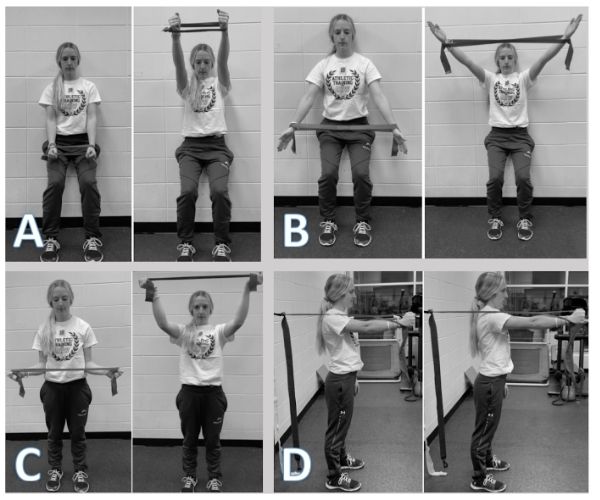
Fig. 1 — Scapular Fixation During MWM
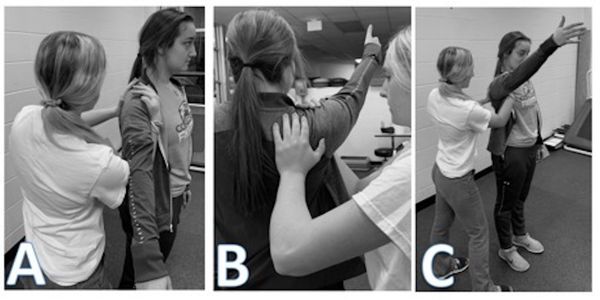
Fig. 2 — Neuromuscular Reeducation Exercises
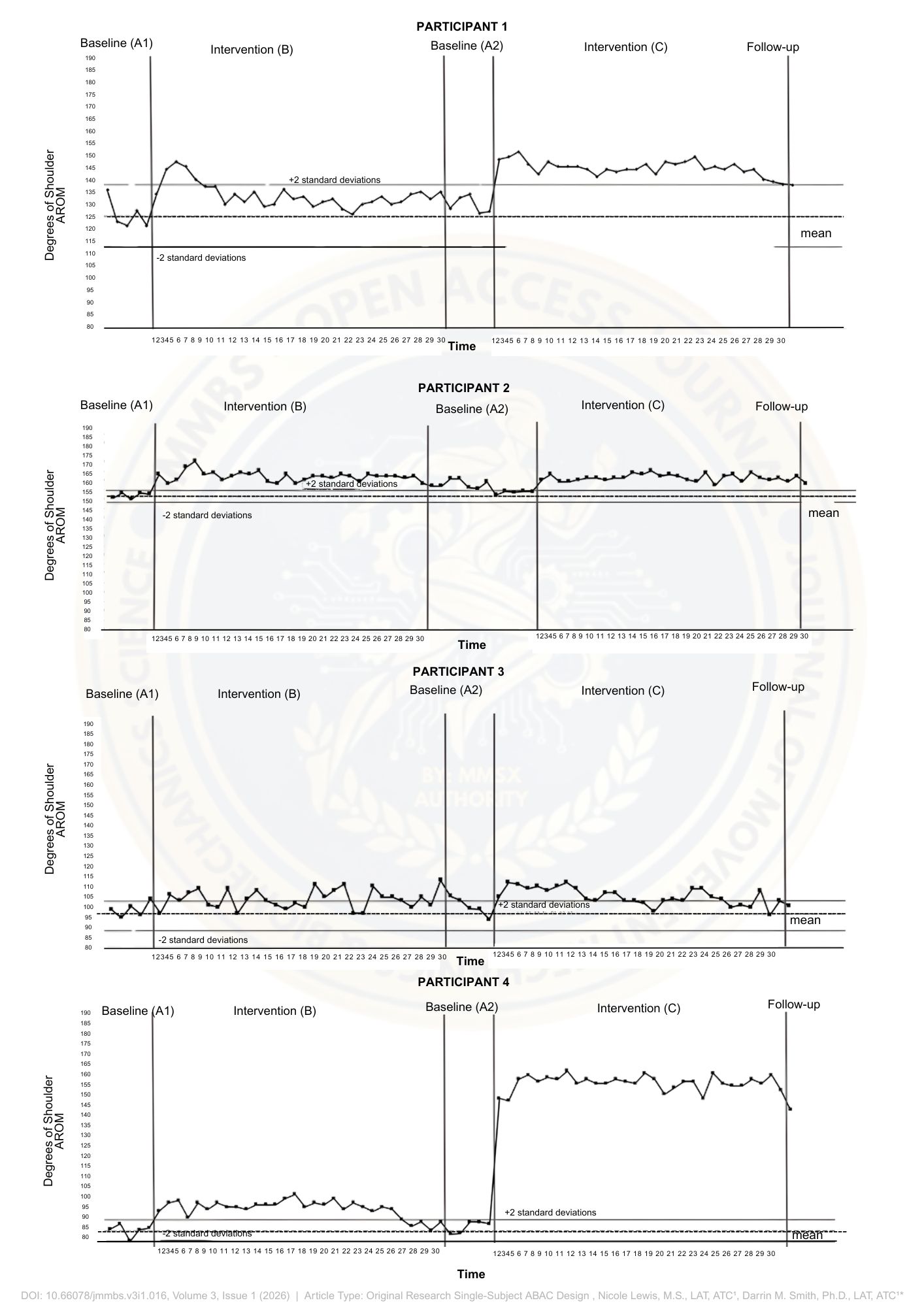
Fig. 3 — AROM Time-Series Data
How to Cite
Lewis, N., & Smith, D. M. (2026). Short-term effects of mobilization with movement, with or without exercise, on pain and shoulder range of motion in recreational athletes with subacromial impingement syndrome: A single-subject ABAC withdrawal study. Journal of Movement Mechanics & Biomechanics Science, 3(1). https://doi.org/10.66078/jmmbs.2026.v3i1.016
Ethics
Concordia University Wisconsin IRB (#1602982-1). Written informed consent obtained. Image consent obtained by PI.
Conflicts of Interest
No competing interests declared.
Funding
No external funding provided.
Data Availability
Data available from corresponding author on reasonable request. Raw AROM data in Fig. 3 and supporting Excel sheets.