
JMMBS
Journal of Movement Mechanics & Biomechanics Science
Vol. 3 · Issue 1 · March 2026
ISSN: 3070-3662 (Online) · DOI Prefix: 10.66078/jmmbs
Original Research · Randomised Crossover Trial
Scheduled Intermittent Compression-Decompression Therapy Attenuates Cumulative Lumbar Shear Amplification During Prolonged Occupational Sitting
Investigación Original · Ensayo Cruzado Aleatorizado
La Terapia de Compresión-Descompresión Intermitente Programada Atenúa la Amplificación del Cizallamiento Lumbar Acumulativo durante la Sedestación Ocupacional Prolongada
بحث أصلي · تجربة عشوائية متقاطعة
علاج الضغط وفك الضغط المتقطع المجدول يخفف من تراكم تضخم قوى القص القطني أثناء الجلوس المهني الطويل
Abstract
English
Background
Professional pilots and long-haul truck drivers represent populations at extreme risk for chronic low back pain due to prolonged static sitting, whole-body vibration, and cumulative mechanical exposure. Traditional ergonomics addresses posture but does not interrupt the progressive mechanical creep and shear amplification occurring at the L5/S1 segment.
Objective
To evaluate Scheduled Intermittent Compression-Decompression (SICD) therapy in reducing the rate of L5/S1 shear amplification during a standardised 30-day occupational cycle in a professional high-exposure cohort.
Methods
Randomised crossover trial (n = 20). Biomechanical load normalised per kg body mass. Primary outcomes: estimated L5/S1 shear forces (biomechanical modelling), multifidus muscle thickness (diagnostic ultrasound at L5), and autonomic markers (HRV RMSSD). A 14-day washout period separated conditions.
Results
SICD therapy reduced Day 30 shear amplification by 10.4% vs. controls (2.24 vs. 2.50 N/kg; p = 0.03). Multifidus atrophy was significantly mitigated (8% reduction in controls vs. baseline maintenance in SICD; p < 0.05). HRV RMSSD improved (38.7 ms vs. 32.5 ms).
Conclusion
SICD acts as a mechanical reset preventing accumulation of shear forces beyond structural thresholds, and provides a citable framework for industrial health interventions — representing a paradigm shift from static ergonomics to dynamic biomechanical load management.
Keywords: lumbar shear amplification; SICD therapy; occupational sitting; viscoelastic creep; L5/S1; multifidus; whole-body vibration; low back pain; biomechanical reset; HRV RMSSD
Resumen
Español
Antecedentes
Los pilotos profesionales y conductores de camiones de larga distancia representan poblaciones con riesgo extremo de dolor lumbar crónico debido a la sedestación estática prolongada, la vibración de cuerpo entero y la exposición mecánica acumulativa. La ergonomía tradicional aborda la postura, pero no interrumpe el fenómeno de creep mecánico progresivo ni la amplificación del cizallamiento en el segmento L5/S1.
Objetivo
Evaluar la terapia de compresión-descompresión intermitente programada (SICD) para reducir la tasa de amplificación del cizallamiento L5/S1 durante un ciclo ocupacional estandarizado de 30 días en una cohorte profesional de alta exposición.
Métodos
Ensayo cruzado aleatorizado (n = 20). Carga biomecánica normalizada por kg de masa corporal. Resultados primarios: fuerzas de cizallamiento estimadas en L5/S1 (modelado biomecánico), grosor del músculo multífido (ecografía diagnóstica en L5) y marcadores autonómicos (HRV RMSSD). Período de lavado de 14 días entre condiciones.
Resultados
La terapia SICD redujo la amplificación del cizallamiento al día 30 en un 10,4% respecto al control (2,24 frente a 2,50 N/kg; p = 0,03). La atrofia del multífido se mitigó significativamente (reducción del 8% en controles frente a mantenimiento basal en SICD; p < 0,05). El RMSSD de HRV mejoró (38,7 ms frente a 32,5 ms).
Conclusión
La terapia SICD actúa como un reinicio mecánico, previniendo la acumulación de fuerzas de cizallamiento más allá de los umbrales estructurales. Los hallazgos representan un cambio de paradigma desde la ergonomía estática hacia la gestión dinámica de cargas biomecánicas en entornos ocupacionales de alto riesgo.
Palabras clave: amplificación del cizallamiento lumbar; terapia SICD; sedestación ocupacional; creep viscoelástico; L5/S1; multífido; vibración de cuerpo entero; dolor lumbar; reinicio mecánico; HRV RMSSD
الملخص
العربية
الخلفية
يمثّل الطيارون المحترفون وسائقو الشاحنات لمسافات طويلة فئاتٍ معرّضةً بشكل بالغ لآلام أسفل الظهر المزمنة، نتيجة الجلوس الساكن لفترات مطوّلة والتعرض للاهتزاز الكلي للجسم والأحمال الميكانيكية المتراكمة. تُعالج الإرغونوميكس التقليدية الوضعية الجسمية، غير أنها لا تُوقف ظاهرة الزحف الميكانيكي التدريجي وتضخم قوى القص في مقطع L5/S1.
الهدف
تقييم فعالية علاج الضغط وفك الضغط المتقطع المجدول (SICD) في تقليل معدل تضخم قوى القص عند L5/S1 خلال دورة مهنية موحّدة مدتها 30 يومًا في مجموعة مهنية عالية التعرض.
المنهجية
تجربة عشوائية متقاطعة (ن = 20). تم تطبيع الحمل الميكانيكي الحيوي بالنسبة لكل كيلوغرام من كتلة الجسم. شملت النتائج الأولية: قوى القص المُقدَّرة عند L5/S1 (نمذجة بيوميكانيكية)، وسماكة عضلة المتعدد الشعب (بالموجات فوق الصوتية عند L5)، ومؤشرات الجهاز العصبي اللاإرادي (HRV RMSSD). فُصل بين الحالتين بفترة غسيل مدتها 14 يومًا.
النتائج
خفّض علاج SICD تضخم قوى القص في اليوم الثلاثين بنسبة 10.4% مقارنةً بالمجموعة الضابطة (2.24 مقابل 2.50 نيوتن/كجم؛ p = 0.03). خُفِّف ضمور العضلة المتعددة الشعب بشكل ملحوظ (انخفاض 8% في المجموعة الضابطة مقابل الحفاظ على القيم الأساسية في مجموعة SICD؛ p < 0.05). تحسّن RMSSD لـ HRV (38.7 مللي ثانية مقابل 32.5 مللي ثانية).
الخلاصة
يعمل علاج SICD بوصفه إعادة ضبط ميكانيكية، تمنع تراكم قوى القص عند تجاوز عتبات السلامة الهيكلية. تُمثّل هذه النتائج تحولًا نموذجيًا من الإرغونوميكس الساكنة إلى الإدارة الديناميكية للأحمال الميكانيكية الحيوية في البيئات المهنية عالية الخطورة.
الكلمات المفتاحية: تضخم قوى القص القطني; علاج SICD; الجلوس المهني; الزحف اللزج المرن; L5/S1; العضلة المتعددة الشعب; اهتزاز الجسم الكلي; آلام أسفل الظهر; إعادة الضبط الميكانيكي; HRV RMSSD
10.4%
Shear Reduction / Reducción / تخفيض القص
Day 30 vs. Control · p = 0.03
8%
Atrophy Prevented / Atrofia Prevenida / الوقاية من الضمور
Multifidus thickness maintained at baseline
38.7 ms
HRV RMSSD (SICD)
vs. 32.5 ms control group

Fig. 1 — Study Design
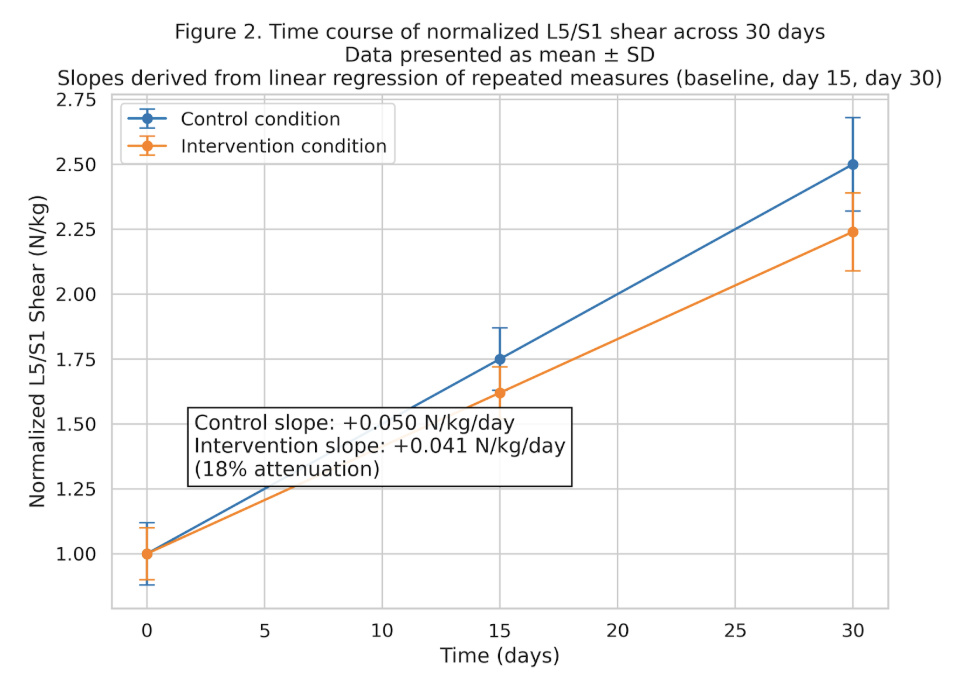
Fig. 2 — L5/S1 Shear Time Course
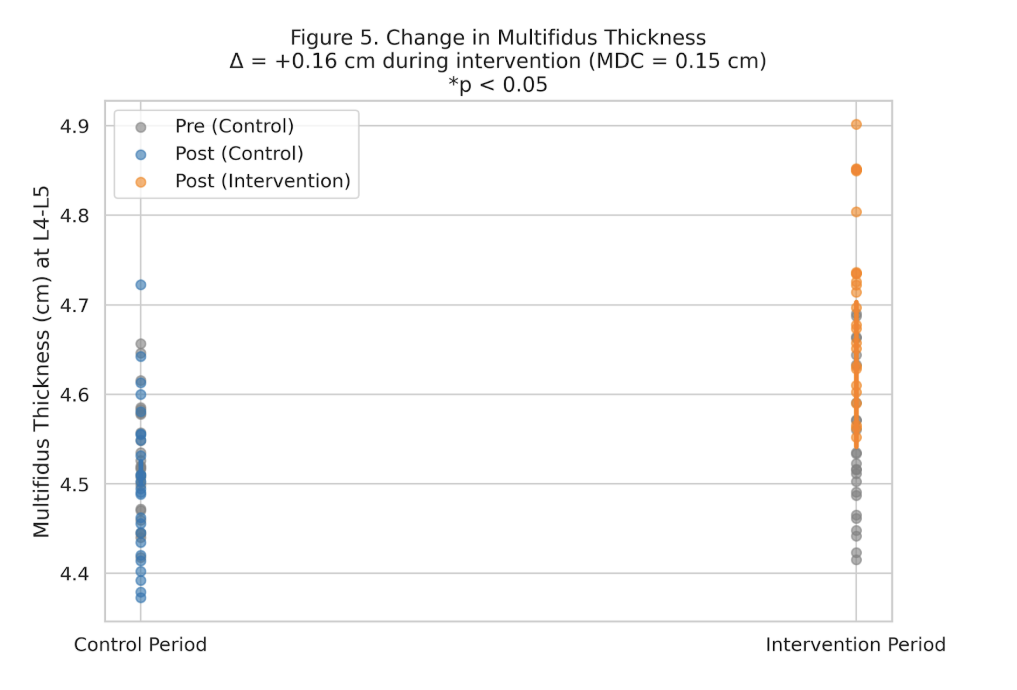
Fig. 3 — Multifidus Thickness
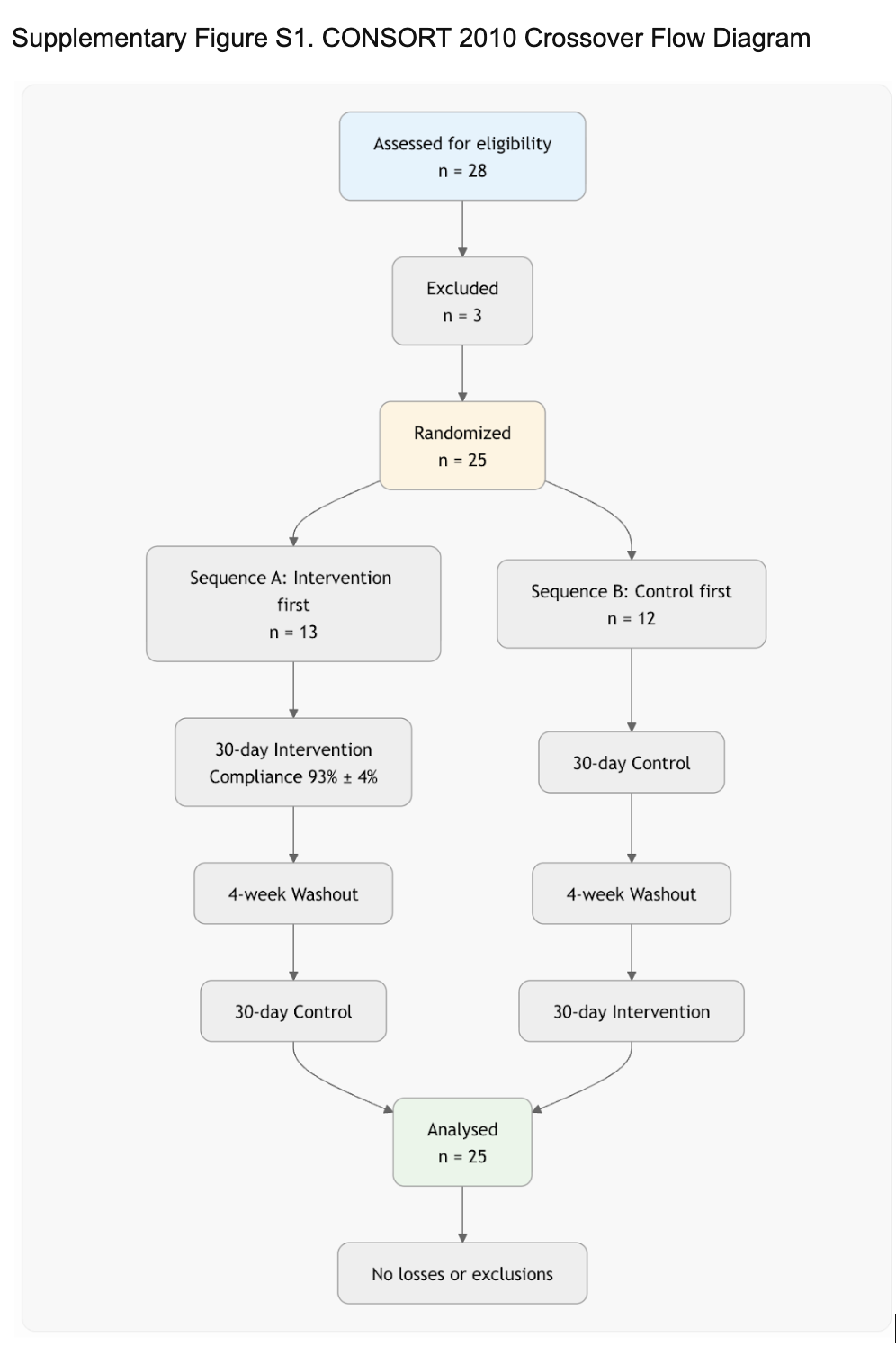
Fig. 4 — HRV RMSSD Markers
How to Cite
Mehta, N., Alfiero, C., Jain, K., Spetan, H., Martinez, J. E., & Imen, A. (2026). Scheduled intermittent compression-decompression therapy attenuates cumulative lumbar shear amplification during prolonged occupational sitting. Journal of Movement Mechanics & Biomechanics Science, 3(1). https://doi.org/10.66078/jmmbs.v3i1.009
Ethics
Conducted per Declaration of Helsinki. Written informed consent from all participants.
Conflicts of Interest
None declared. No device manufacturer involvement in design or funding.
Funding
No external funding. Independent work under MMSx Authority Institute.
Author Contributions
Design: N.M., C.A. Clinical: K.J. Data: H.S., J.E.M., A.I. Analysis & writing: N.M. All approved.