
JMMBS
Journal of Movement Mechanics & Biomechanics Science

NARRATIVE REVIEW
Shoulder Preservation in Elite Wheelchair Court Sports: Kinetic Chain Analysis
Authors and Affiliations
MMSx Authority Institute for Movement Mechanics & Biomechanics Research, Powell, Ohio, USA.
 0000-0001-6200-8495
0000-0001-6200-8495
University of M’sila, Algeria. Manager & Coach, Special Olympics.
0000-0003-1972-1601
0000-0003-1972-1601
Kharazmi University, Tehran, Iran. Dept. of Sports Biomechanics.
0000-0002-9828-5723
0000-0002-9828-5723
GFFI Fitness Academy, India. Dept. of Exercise Science.
0009-0009-5920-0158
0009-0009-5920-0158
Orthopaedic Surgery Division, San Francisco, California, USA.
0009-0000-9635-7132
0009-0000-9635-7132
MMIPR, Maharishi Markandeshwar University, India.
0000-0002-4215-6842
0000-0002-4215-6842
Abstract
Background: Elite athletes in wheelchair sports face high repetitive upper-limb loads. Shoulder pain and degenerative conditions are prevalent in 16–76%.
Purpose: To examine shoulder injury risk through a kinetic chain framework, emphasizing trunk mechanics and coordination.
Methods: A narrative review (PubMed, Scopus through 2025) analyzed kinematic, kinetic, and EMG data in elite cohorts.
Results: Effective sequencing reduces glenohumeral forces by 15–25%. Trunk modulation and scapulothoracic upward rotation significantly lower rotator cuff demand. Coordination deficits explain 30–50% of injury variance.
Conclusion: Injury risk is driven by kinetic chain inefficiencies. Integrated trunk–scapular coordination training may enhance load distribution and performance sustainability.
JMMBS ID: JMMBS-2026-001-SPEW-V2-I2
IMSO ID: IMSO-REG-20260219-RS-4200-WL-CHR
DOI: 10.66078/jmmbs.v2i2.001
IMSO ID: IMSO-REG-20260219-RS-4200-WL-CHR
DOI: 10.66078/jmmbs.v2i2.001

Fig 1. Trunk flexion vs shoulder load reduction

Fig 2. Scapulothoracic dyskinesis vs rotator cuff EMG demand

Fig 3. Wheelchair propulsion force-time profiles
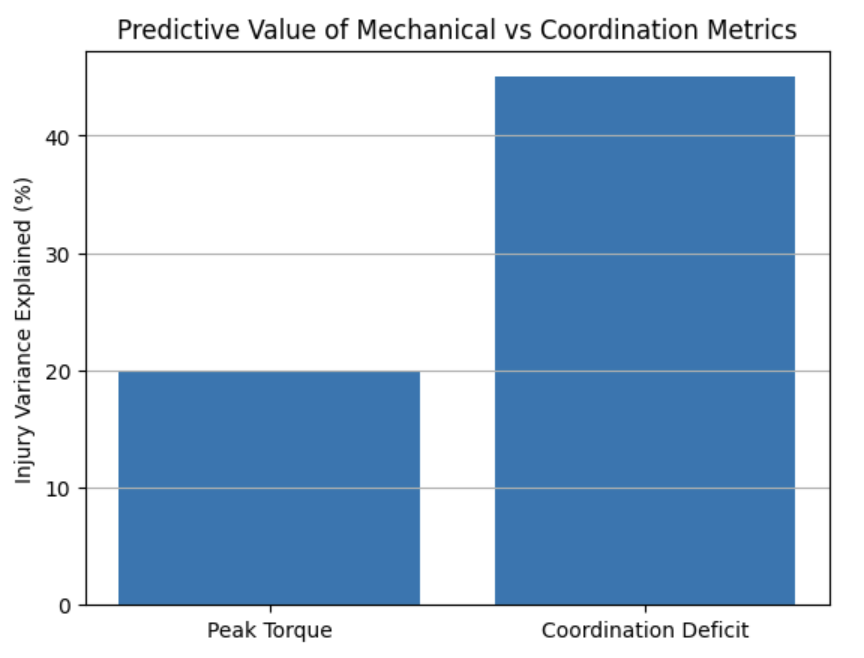
Fig 4. Injury variance explained: Torque vs Coordination